Air Canada Expands Landline Motorcoach to Niagara, Muskoka, and Sarnia
Air Canada is widening its Landline motorcoach network in Ontario, with three new communities set to join the program this summer. On March 12, 2026, the airline announced it has renewed its agreement with The Landline Company and will add service linking Niagara, Muskoka, and Sarnia with Toronto Pearson starting June 15, 2026.
The expansion matters because these coach trips are sold as part of an Air Canada itinerary, rather than as a separate airport bus. That means travellers can book a single reservation, earn Aeroplan points on the ground segment, and receive disruption protection similar to a regular connecting itinerary. For many passengers outside the GTA, it is effectively another way to access Air Canada’s network without a short-haul flight.
What Air Canada announced
Under the new plan, Landline will connect six Ontario communities with Toronto Pearson during the summer 2026 schedule. The three additions are Niagara, Muskoka, and Sarnia, while Kingston and Kitchener-Waterloo will also see more service. Air Canada said Landline’s network will reach 26 daily departures to and from Toronto Pearson across those six communities.
The new routes begin June 15, 2026. Air Canada also said two added daily round trips to Kingston will begin on May 1, 2026, while added Kitchener-Waterloo frequencies will start June 15, 2026.
That summer 2026 schedule is as follows:
Summer 2026 Landline schedule in Ontario
- Hamilton (YHM): 5 daily round trips
- Kingston (YGK): 4 daily round trips
- Kitchener-Waterloo (YKF): 12 daily round trips
- Muskoka (YQA): 2 daily round trips
- Niagara (YCM): 3 daily round trips
- Sarnia (YZR): 2 daily round trips
One detail worth noting is that Sarnia service will operate via Kitchener-Waterloo, rather than as a fully nonstop coach to Pearson.
How the service works in practice
The Landline product is designed to function as an Air Canada connection, not just ground transport. Customers starting in participating communities check in at the local airport before security, receive boarding passes for all segments, and have their bags tagged to the final destination.
Once they arrive at Toronto Pearson, passengers still need to proceed to bag drop and then security before heading to their departure gate. That is different from a fully airside connection, but the process is still more integrated than booking a separate bus and flight on your own.
Air Canada says customers on these itineraries receive the same key benefits as air-only bookings, including disruption protection and Aeroplan earning. For travellers who value a single ticket and protected connection, that is the main advantage over driving to Pearson or piecing together separate transport.
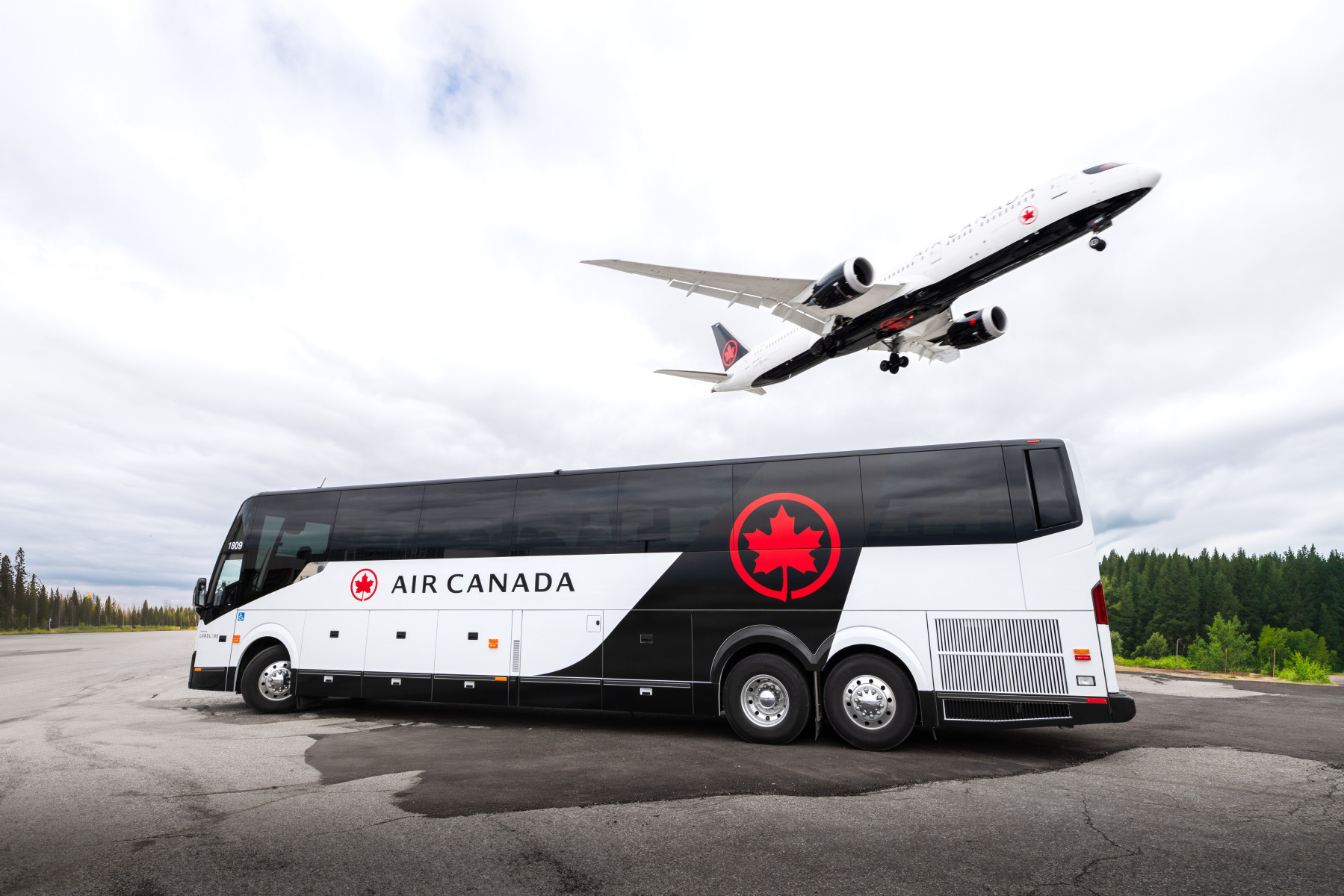
The coaches themselves are Air Canada-branded vehicles operated by Landline and built in Quebec by Prevost. Air Canada says they include leather seating, Wi-Fi, power outlets, and accessibility features for passengers with reduced mobility.
Why Niagara is the most interesting addition
Of the three new points, Niagara may be the most notable for leisure travellers. Air Canada said Niagara service will extend beyond Niagara District Airport, with pickup and drop-off at the Niagara Falls Marriott on the Falls.
That gives inbound visitors a direct booked connection from Air Canada’s network to a hotel area beside one of Canada’s busiest tourism districts. It also gives local travellers another option to start an itinerary without first making their own way to Pearson.
For Canadian travellers, this could be especially useful for international trips departing Toronto Pearson early in the day or returning late at night. Rather than paying for airport parking in the GTA or arranging a separate shuttle, some passengers may prefer to start from Niagara on a single itinerary.
What this means for Muskoka and Sarnia travellers
Muskoka’s addition is a logical seasonal move. Summer is the region’s peak travel period, and the new service gives cottagers, residents, and inbound visitors another way to connect with Pearson without relying on a regional flight.
Sarnia is a different case. Air Canada no longer operates scheduled flights there, so Landline offers a way to restore access to the airline’s network without putting aircraft back on the route. Because the service runs via Kitchener-Waterloo, it will not be as direct as some other coach links, but it still creates a bookable, protected Air Canada connection from southwestern Ontario.
For passengers in smaller Ontario markets, this is likely the real long-term role of the program: maintaining network access in places where short regional flights are hard to sustain economically.
Booking details and an important deadline
Air Canada said customers who already have an Air Canada booking to or from Toronto Pearson after the new routes launch can add a Landline segment to an existing itinerary at no extra cost by calling the contact centre, provided they do so by April 30, 2026.
That is a useful detail for anyone in Niagara, Muskoka, or Sarnia who already booked summer travel before the announcement. If your itinerary currently starts or ends at Pearson, it may be worth checking whether a Landline segment can be added under this policy.
As usual, travellers should still compare total timing carefully. A protected connection is valuable, but the best option will depend on departure time, traffic risk, baggage needs, and whether overnight airport parking or a hotel stay would otherwise be required.
If you collect Aeroplan, the Landline setup is also notable because Air Canada says members earn points on both the ground and air portions of the itinerary. That will be more appealing to passengers booking through Air Canada rather than arranging their own drive to Pearson.
A broader shift in how airlines serve regional markets
Air Canada first launched its Ontario Landline partnership in 2024, initially serving Hamilton and Kitchener-Waterloo. It later expanded to Kingston, and this latest announcement deepens that approach rather than returning to traditional short regional flying on every route.
From the airline’s perspective, the model can preserve network feed into Pearson while avoiding the costs and operational complexity of very short sectors. For travellers, the value proposition is less about speed and more about simplicity: one booking, one fare, one set of protections.
This may not replace the convenience of a nonstop regional flight for everyone. But in markets where air service is limited or has disappeared, it can be a practical middle ground.
The move also reinforces Toronto Pearson’s role as the key connecting hub for Ontario-based international travel. Rather than asking travellers in smaller communities to self-position to Pearson, Air Canada is increasingly trying to bring those communities into the booking path directly.
Which travellers are most likely to benefit
This type of service will be most useful for a few specific groups:
Leisure travellers heading overseas
If you are based in Niagara or Muskoka and booking a long-haul trip from Pearson, Landline may remove the need for a separate drive, hotel, or parking expense. That can be especially helpful on trips where checked bags and connection protection matter.
Travellers earning points on a single itinerary
Passengers who prefer a protected booking and loyalty earning may find this more attractive than driving themselves. If you regularly book Air Canada and value integrated itineraries, the convenience can outweigh the longer ground segment.
Inbound visitors to Ontario destinations
The Niagara arrangement is particularly relevant here. Visitors can now connect from Air Canada’s network directly toward the Falls area on one reservation, which should make trip planning simpler.
Travellers using premium or points-focused cards
If you are booking Air Canada flights regularly, the usual card strategy still applies. A co-branded card such as the Amex Aeroplan Reserve or TD Aeroplan Visa Infinite may make sense for frequent Air Canada flyers, while flexible points cards like the Amex Cobalt can still be useful for building transferable balances for future flight redemptions.
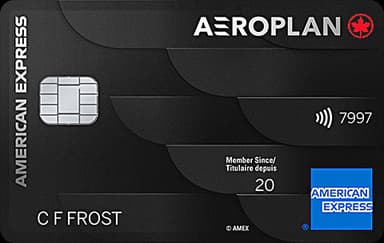
Complimentary access for the Basic and eligible Supplementary Cardmembers to any Air Canada Café and any Maple Leaf Lounge located in Canada and the United States, including international terminals in Canada and the U.S., when travelling on an eligible same-day Air Canada or Star Alliance flight. Each is also entitled to bring one guest complimentary; additional guests may enter for a fee.


A few practical things to keep in mind
Before booking, pay attention to the exact departure point listed on your itinerary. Niagara is not just an airport transfer product, since the service also continues to the Niagara Falls Marriott on the Falls.
You should also leave extra margin in your planning if you are travelling during peak summer weekends. Even though this is a protected itinerary, coach travel is still exposed to road conditions in a way that a short flight is not.
Finally, remember that this is not yet an airside-to-airside process. Travellers arriving at Pearson from a Landline coach still need to go through the airport’s usual next steps before reaching their gate. If you want to understand airport connection logistics more broadly, our guide to Maple Leaf Lounge access may also be useful if you are connecting through Pearson on an eligible ticket or status level.
Earning Aeroplan on every trip?
Compare Aeroplan credit cards from TD, CIBC, and American Express — plus other top Canadian travel cards — by annual fee, earn rate, lounge access, and travel perks.
Takeaway
Air Canada’s March 12, 2026 announcement is a meaningful expansion of its Ontario Landline strategy. Starting June 15, 2026, Niagara, Muskoka, and Sarnia will join the network, while Kingston and Kitchener-Waterloo gain added frequencies, bringing the system to 26 daily departures across six Ontario communities.
For travellers, the key benefit is not simply a bus to Pearson. It is the ability to book a single Air Canada itinerary with baggage tagging, Aeroplan earning, and disruption protection built in. If you live in one of these communities and already have summer travel booked through Toronto Pearson, the April 30, 2026 deadline to add a Landline segment at no extra cost is the detail most worth checking now.