Why Air France business class is worth booking with points
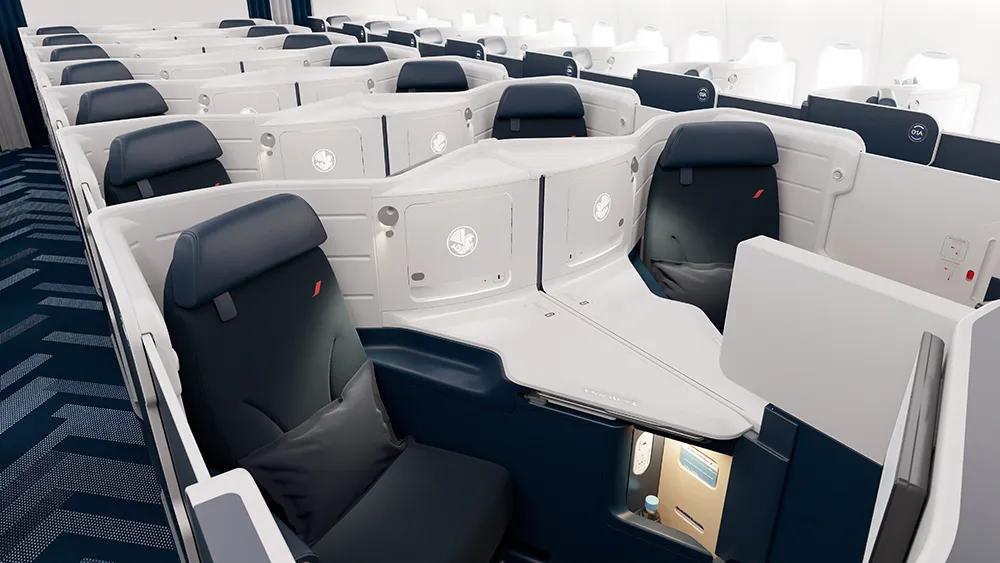
Air France business class can be an excellent use of points because it combines a strong onboard experience with frequent opportunities to find reasonably priced awards through Flying Blue (Air France-KLM’s loyalty program).
Depending on route, season, and demand, you can sometimes find one-way business-class awards between North America and Europe at surprisingly low mileage levels. The catch is that Flying Blue uses dynamic pricing and adds taxes and carrier surcharges, so the best value comes from knowing where to earn the right points and how to search efficiently.
The program you’ll usually use: Flying Blue
For Air France business class, Flying Blue is typically the most direct and practical program to book:
- You can book Air France and KLM flights online with miles.
- Pricing is dynamic (so it changes a lot).
- Promo Rewards can discount select routes each month.
- Changes/cancellations are generally possible for a fixed fee per ticket (as long as you do it before check-in closes).
In this guide, the core strategy is simple:
- Earn transferable points in Canada (primarily Amex Membership Rewards).
- Search for award availability first.
- Transfer points only after you find the flights you want.
- Book immediately.
The best ways for Canadians to earn the points you need
1) American Express Membership Rewards (the main “engine” for Canadians)
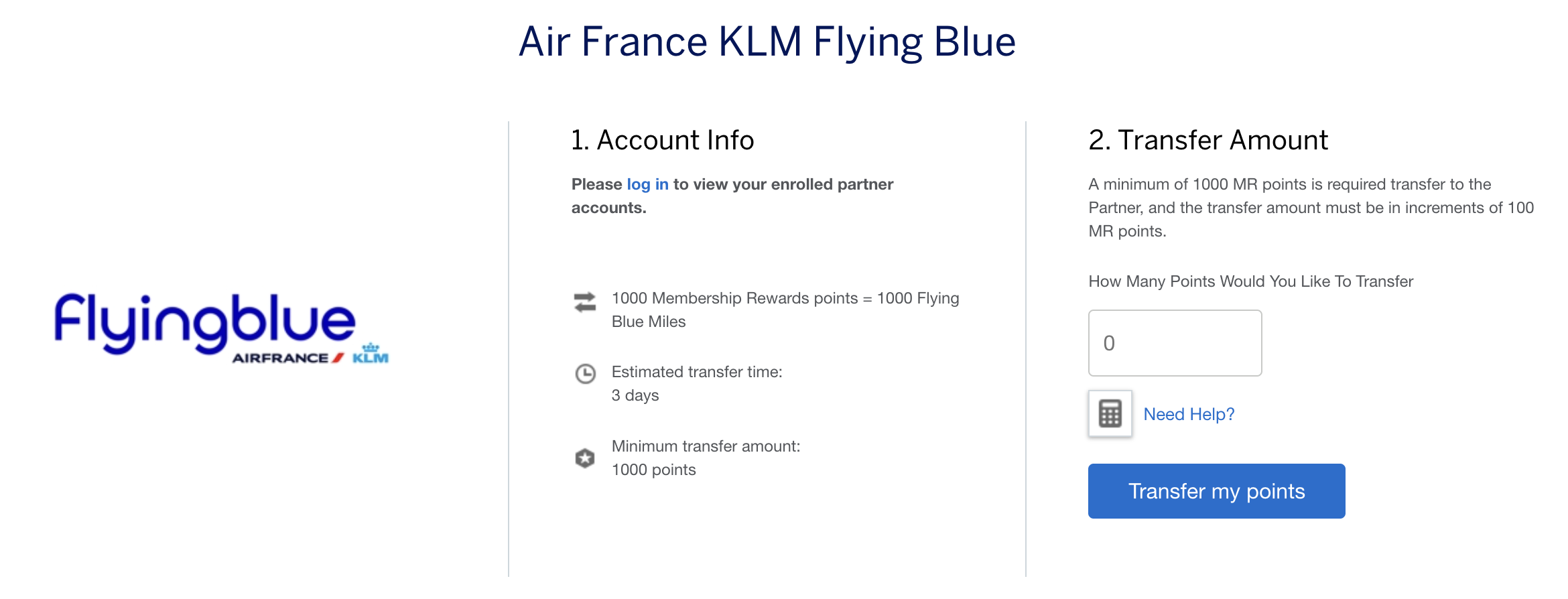
For most Canadians, American Express Membership Rewards is the single best pathway because you can transfer points to Flying Blue when you’re ready to book. American Express points transfer over to Flying Blue at a ratio of 1:1, which is favourable.
Why this matters:
- You’re not locked into Flying Blue until you transfer.
- You can accumulate points quickly with the right earn categories and welcome bonuses.
- You can pivot to other airline partners if Flying Blue pricing isn’t ideal for your dates.
Best Canadian cards to earn Membership Rewards (typical use cases):
-
American Express Cobalt Card
Ideal for: earning fast through everyday spending
Why: strong multipliers on “eats & drinks” (which often includes many grocery and food merchants) plus solid everyday usability. -
American Express Gold Rewards Card
Ideal for: a flexible travel points card with strong “all-around” earning and perks
Why: good category bonuses (including travel categories) and Membership Rewards flexibility. -
The Platinum Card (Canada)
Ideal for: someone who wants lounge access, premium travel perks, and a large welcome bonus
Why: can be a high-fee card, but points + benefits can justify it if you’ll use the perks.
How to maximize Amex points for Flying Blue bookings:
- Concentrate spend where your card earns the most (especially food/grocery-type categories for Cobalt).
- Stack welcome bonuses across one or two Amex cards if your budget supports it.
- Keep points in Membership Rewards until you find award space (transfers are one-way).
Important habit: always search award space first, then transfer points. Award space can disappear quickly, and transfers generally can’t be reversed.
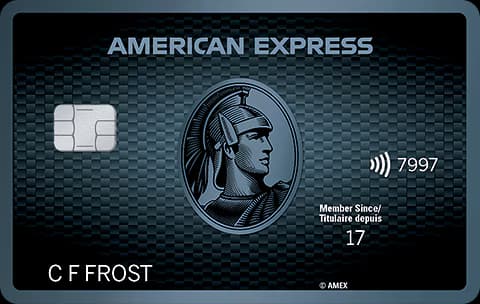
American Express Cobalt Card
Annual fee: $191.88
Up to 15,000 Membership Rewards points
- Earn 15,000 Membership Rewards points upon spending $750 in per monthly billing period for 12 months
- Up to 15,000 Membership Rewards points welcome offer
- Strong earn rate of 5 Membership Rewards points per $1 on eats & drinks and 3 Membership Rewards points per $1 on streaming subscriptions
- Membership Rewards points never expire
2) Air France KLM World Elite Mastercard (Canada) for earning Flying Blue miles directly
Canada also has a co-branded option that earns Flying Blue miles directly. In most cases, this card earns 1 Mile per $1 spent.
When it makes sense:
- You want to earn Flying Blue miles without relying entirely on Amex acceptance.
- You specifically plan to redeem through Flying Blue over and over.
- You value card-specific perks tied to Flying Blue (like status-related boosts/XP and mileage validity extensions, depending on the offer/terms).
When it doesn’t:
- You’d rather earn flexible points you can transfer to multiple airlines.
- You’re not sure you’ll book Flying Blue awards in the near future.
A practical approach many Canadians use:
- Earn the bulk of miles via Amex Membership Rewards (for flexibility).
- Use the Flying Blue Mastercard as a secondary card when Amex isn’t accepted or for targeted benefits.
3) Marriott Bonvoy points (a useful backup or top-up source)
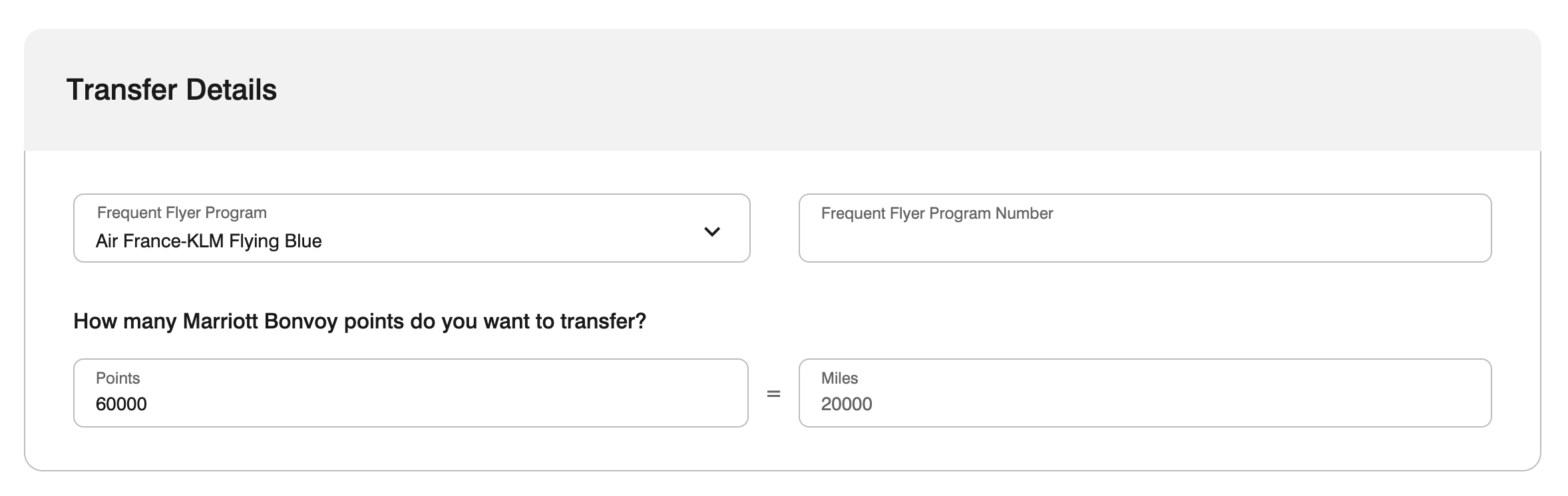
Marriott Bonvoy can transfer to many airline programs, including Flying Blue. This is rarely the best primary strategy as the ratio of Marriott Bonvoy points to Flying Blue is 3:1, but it’s very useful for:
- Topping up when you’re short a few thousand miles.
- Leveraging an existing Marriott balance from hotel stays, promos, or credit card spend.
If you use this route:
- Compare the effective conversion before you commit.
- Transfer in the recommended increments that unlock Marriott’s airline transfer bonuses (when applicable).
4) Earning Flying Blue miles the slow-but-steady way
You can also earn Flying Blue miles from:
- Paid flights on Air France/KLM and many partners
- Hotel, car rental, and other Flying Blue partners
- Flying Blue Family pooling (helpful if you’re earning across a household)
This is usually not the fastest path to a premium cabin, but it becomes meaningful over time, especially if you travel regularly or pool with family.
How many points do you actually need for Air France business class?
Flying Blue pricing is dynamic, so there’s no single “award chart” you can memorize. Instead, think in ranges:
- Best-case “floor” pricing on some North America–Europe routes can be very compelling for one-way business class.
- Typical pricing can be higher on peak dates, popular gateways, or close-in bookings.
- Promo Rewards can sometimes cut the mileage cost on select routes and cabins each month.
Your goal is to catch the low end of the range:
- Search widely (different dates, nearby airports, one-way segments).
- Use Promo Rewards opportunistically.
- Book quickly when you find a price you like.
Finding award space that’s actually bookable
Start with the right search mindset
Flying Blue awards are easiest to find if you:
- Search one-way first (it’s more flexible and easier to piece together).
- Check multiple nearby departure airports (especially if you can position).
- Look at a full week or month view when possible.
- Price out different routings (nonstop vs connecting) to compare mileage + fees.
Use Flying Blue Promo Rewards strategically
Flying Blue publishes monthly Promo Rewards, which discount select routes for travel within a defined window.
How to use them well:
- Treat them as a monthly “deal drop” for points travelers.
- If you’re flexible, let the promo list influence your destination or gateway city.
- Compare Air France vs KLM options; sometimes one has better pricing or schedules.
A realistic Canada strategy:
- Watch for promo routes that touch Canadian gateways (like Montreal or Toronto) and build trips around them.
- If the promo is Europe–Canada in one direction, you can still book the other direction normally, or mix programs if fees are better elsewhere.
Don’t ignore positioning flights
If you’re based in a city that doesn’t price well or doesn’t have good availability, it can be worth positioning to:
- Montreal (YUL)
- Toronto (YYZ)
- Vancouver (YVR)
- Or even a nearby U.S. airport (like Seattle, Boston, New York) if pricing/availability is much better
This can unlock:
- Lower mileage prices
- More dates with availability
- Better aircraft/cabins on certain routes
Step-by-step: how to book Air France business class with points
Step 1: Create a Flying Blue account
Do this early so your account is active and ready. You don’t want to be setting this up while watching the last award seat disappear.
Step 2: Search for your ideal flight before moving any points
Search on:
- Air France’s site, KLM’s site, or Flying Blue’s redemption pages
Tips:
- Start with one-way business class searches.
- Try multiple dates and nearby airports.
- If the price looks high, don’t assume that’s “normal” — check other dates/routes.
Step 3: Confirm the total cost (miles + taxes/fees)
Flying Blue awards often include:
- Government taxes
- Airport fees
- Carrier-imposed surcharges (these can be significant in business class)
Before you transfer points, make sure you’re happy with the all-in cost.
Step 4: Transfer points (only after you see the seats you want)
For Canadians, this usually means transferring American Express Membership Rewards to Flying Blue.
Important:
- Transfers can be quick in practice, but always plan for the posted transfer timeframe.
- Transfers are typically irreversible, so only transfer what you need (or slightly more if you’re topping up for a second passenger).
Step 5: Book immediately and then choose seats/manage the booking
Once the miles land:
- Book right away.
- Then add frequent flyer details (if needed), select seats, and review baggage/meal preferences.
Advanced move: add a stopover (when it makes sense)
Flying Blue has offered stopover-friendly award booking options, but these may require calling in to book rather than self-serve online.
When it’s valuable:
- You want to spend a few days in Paris or Amsterdam en route to your final destination.
- You’re turning one “Europe trip” into two cities without paying two separate awards.
How to do it:
- Find the flights you want online first.
- Then contact Flying Blue to price and book a stopover itinerary.
Family travel: one of Flying Blue’s most underrated perks
Flying Blue has family-oriented features that can make a big difference, especially for premium cabins:
- The Flying Blue Family Account can help you combine balances across a household.
- There is also a discount on reward tickets for children (within the eligible age range) on Air France/KLM-operated flights.
If you’re traveling as a family, Flying Blue can become one of the most efficient ways to reduce the points required for multiple seats.
U.S. points options (useful if you can access them)
If you have access to U.S. credit cards or U.S.-based transferable points, Flying Blue becomes even easier to fund because it’s a transfer partner of multiple major programs.
Common U.S. pathways include:
- American Express Membership Rewards (U.S.)
- Chase Ultimate Rewards
- Citi ThankYou Points
- Capital One miles/points (depending on product and partner list)
Pro tip:
- Watch for transfer bonuses. A limited-time transfer bonus can effectively discount your business-class award by 10%–30% (or more), which can be huge on premium cabin redemptions.
Common mistakes to avoid
-
Transferring points before checking award space. Always search first, then transfer.
-
Fixating on one date or one airport. Flexibility is the difference between “great deal” and “not worth it.”
-
Ignoring the cash portion. Always compare total cost: miles + fees.
-
Not checking Promo Rewards. It’s one of the easiest ways to reduce the miles required.
-
Waiting too long after your miles post. Good business-class space can vanish quickly.
Bottom line
For Canadians, booking Air France business class with points is most practical through Flying Blue funded by American Express Membership Rewards, with the Air France KLM World Elite Mastercard and Marriott Bonvoy as helpful secondary options.
If you learn to search well, stay flexible, and take advantage of Promo Rewards and household pooling, you’ll give yourself a real shot at the best-value business-class redemptions Flying Blue can offer.