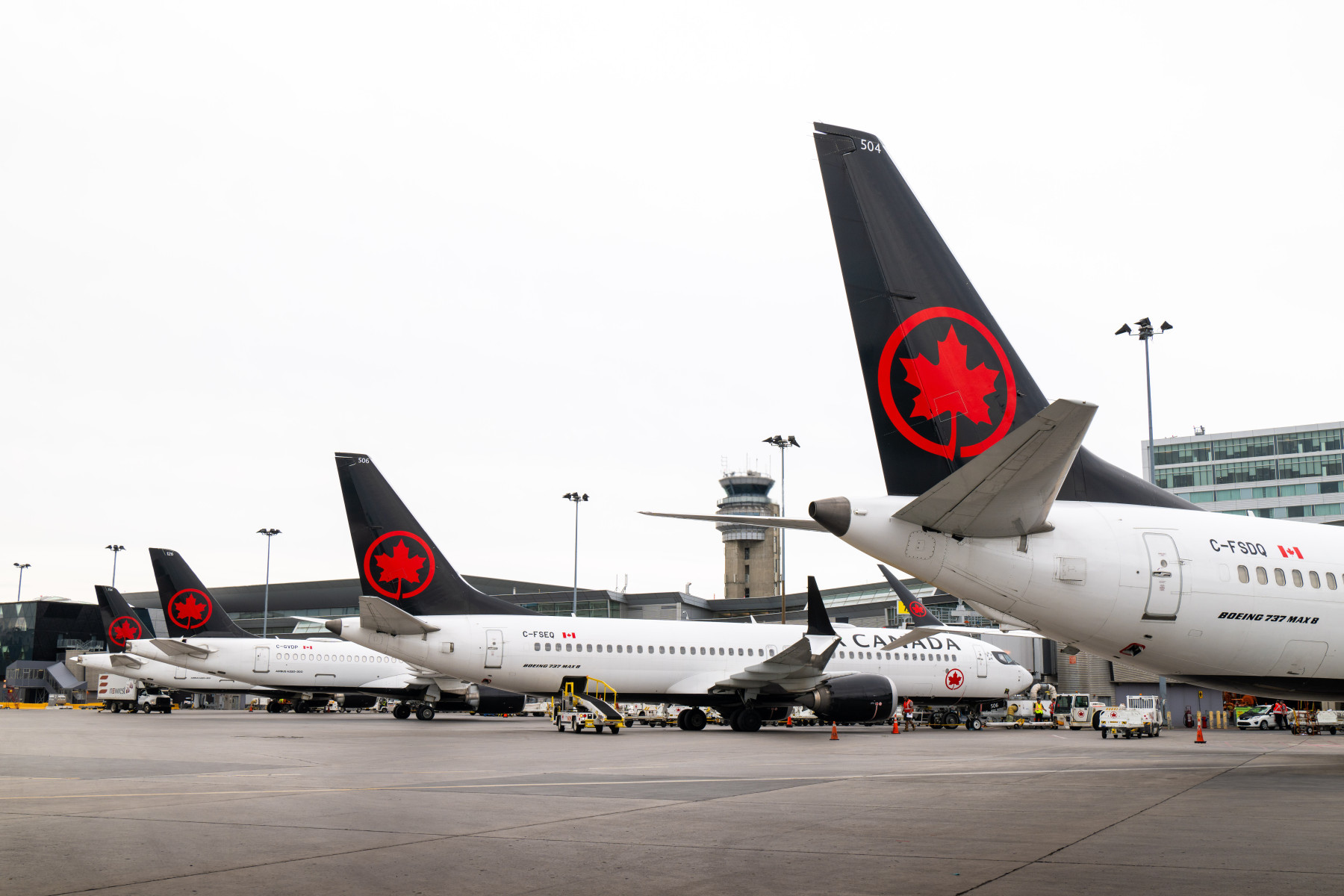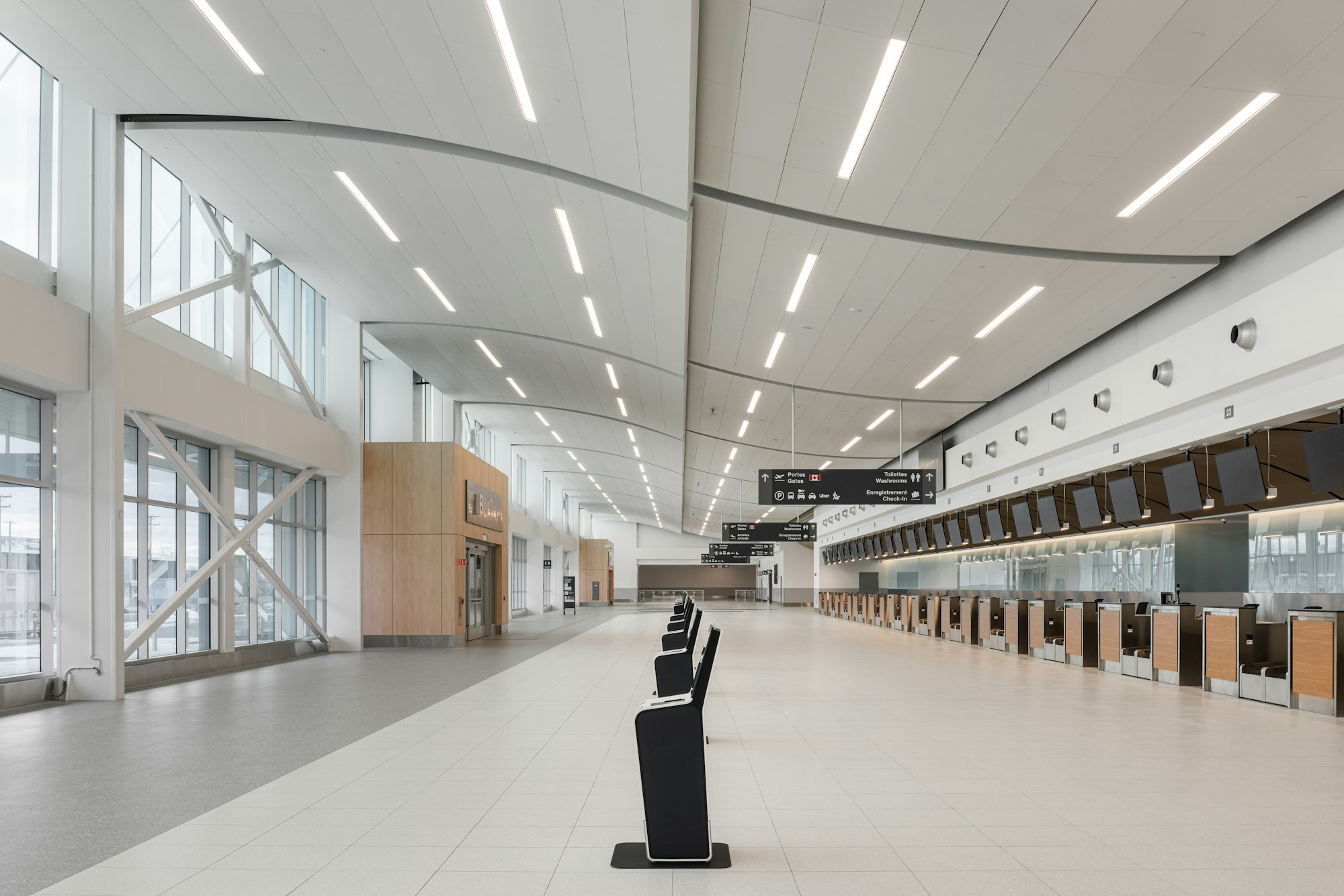
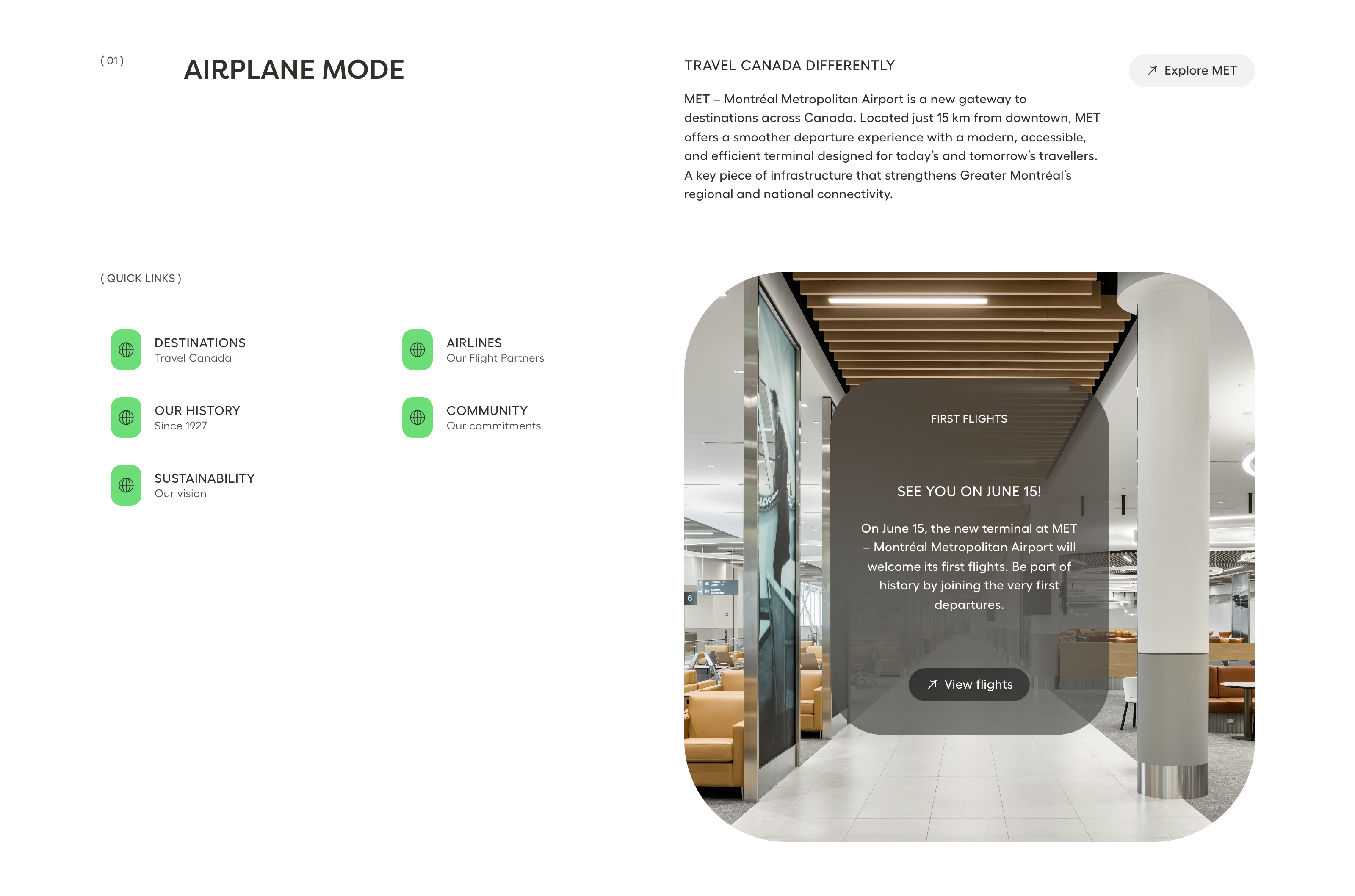
MET – Montreal Metropolitan Airport is scheduled to welcome its first flights on June 15, 2026, according to the airport's official site. The launch moves MET from a long-discussed infrastructure project into an operational airport with confirmed airline partners and a published route map.
The airline picture at launch centres on Porter Airlines, which accounts for the majority of MET's initial destination list. Porter's network from MET includes both Toronto airports, multiple Western Canada cities, and Atlantic Canada — a scope that positions MET as a domestic-focused alternative to Montreal-Trudeau (YUL) rather than a purely regional facility.
This article covers the confirmed launch details, Porter's route list, ground access via the planned METbus shuttle, and the practical implications for Montreal-area travellers.

Confirmed launch details
The following details are published on MET's official site as of March 2026:
- Terminal opening and first flights: June 15, 2026
- Location: 15 km from downtown Montreal (Saint-Hubert, Longueuil)
- Planned connectivity: more than 25 destinations
- Launch airline partners: Porter Airlines and Pascan Aviation
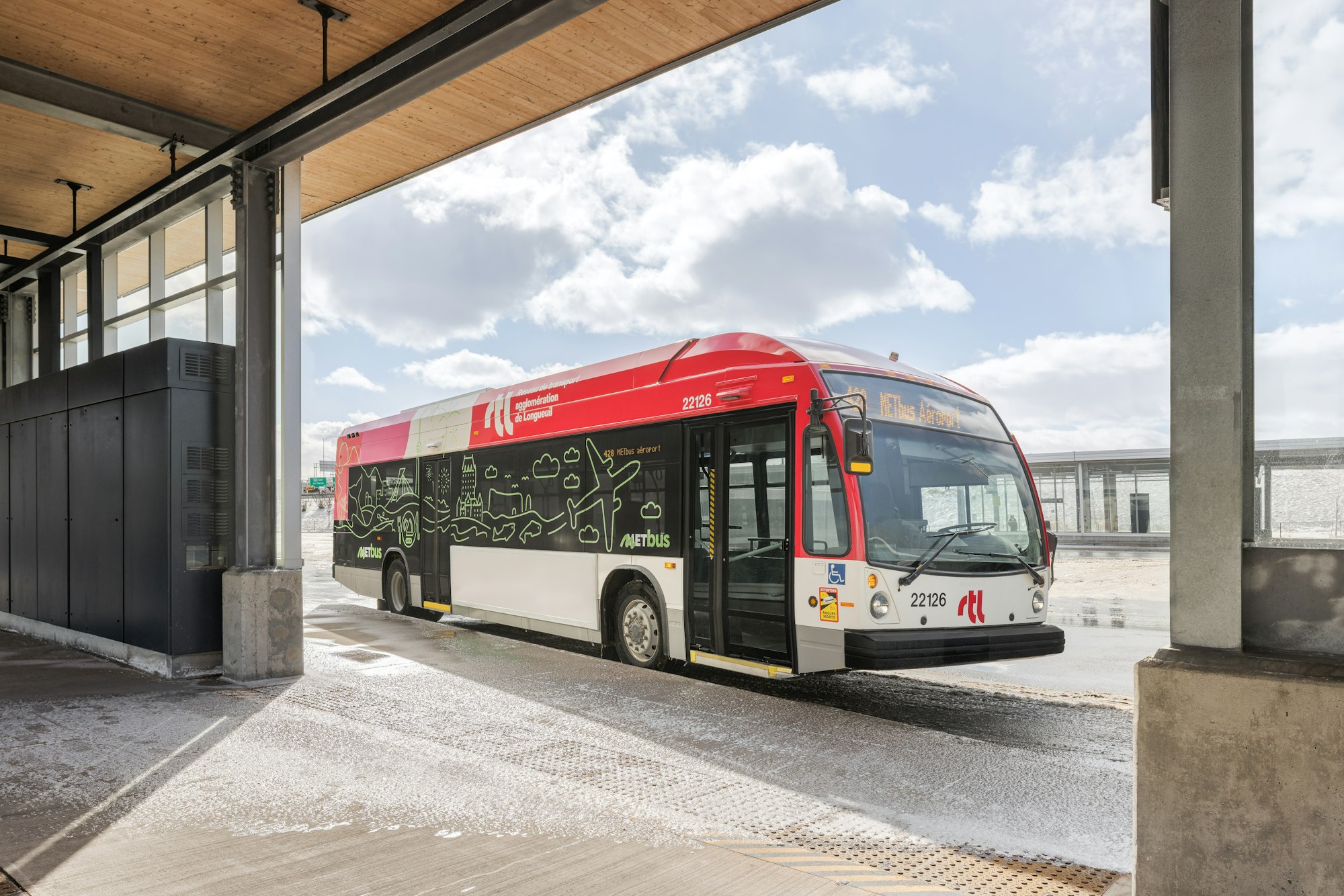
- Ground access: dedicated METbus shuttle between the terminal and Longueuil metro station, running every 35 minutes (operated in partnership with RTL)
The June 15 date makes MET relevant for travellers booking summer 2026 domestic trips from Greater Montreal.
Porter’s route map from MET
Pascan Aviation provides regional Quebec and Eastern Canada connectivity, but Porter accounts for the bulk of MET’s cross-country network.
Based on MET’s current official destination map, Porter is listed with service to the following destinations:
- Toronto (Billy Bishop)
- Toronto (Pearson)
- Halifax
- Quebec City
- Charlottetown
- Calgary
- Moncton
- Edmonton
- Hamilton
- St. John’s
- Winnipeg
- Vancouver
The route list spans all major Canadian regions — Central Canada, Western Canada, Atlantic Canada, and the Prairies — and includes two separate Toronto airport options. This gives MET a national domestic profile rather than a purely short-haul or regional one. Note that none of these are bookable yet, but they should be soon.
How MET compares to YUL for Montreal-area travellers
Montreal-Trudeau (YUL) currently handles all scheduled commercial air service in the Montreal region. MET introduces a second option, though the two airports serve different roles.
MET’s positioning rests on three factors:
1. Proximity to downtown and the South Shore
At 15 km from downtown Montreal, MET is closer than YUL for travellers on the South Shore, in Longueuil, and in parts of central and eastern Montreal. For these areas, the ground travel time and cost to reach MET may be meaningfully lower than to YUL, particularly during peak traffic periods.
2. Smaller terminal design
MET is marketing a modern, accessible, and efficient terminal designed for faster processing. Smaller-terminal airports generally have shorter security lines, shorter walking distances to gates, and less congestion. Whether MET delivers on this at scale will depend on passenger volumes and operational execution after launch.
3. Alignment with Porter’s service model
Porter operates Embraer E195-E2 aircraft and has built its brand around a streamlined, amenity-included travel experience. That service model aligns with MET’s smaller-terminal concept. Porter passengers at MET will encounter an airport environment closer to what the airline already offers at Toronto Billy Bishop — its original and most established hub.
Dual Toronto airport access
Porter’s MET route map includes service to both Toronto Billy Bishop and Toronto Pearson. The two Toronto airports serve different functions:
- Billy Bishop (YTZ) is located on the Toronto Islands, minutes from downtown. It handles mainly domestic and short-haul U.S. routes, with a streamlined terminal and no runway bus transfers.
- Pearson (YYZ) is the main Toronto hub with broad domestic, U.S., and international connectivity. It is the more useful arrival point for connecting itineraries.
Having both options from MET covers multiple trip types:
- Downtown-to-downtown travel: MET to Billy Bishop provides a city-centre-to-city-centre corridor without either traveller passing through a major hub airport
- Connecting itineraries: MET to Pearson gives access to onward connections on Porter, Air Canada, WestJet, and international carriers
- Schedule flexibility: Two Toronto airports increase the number of available departure and arrival times on a given travel day
For related context on Billy Bishop’s expanding capabilities, see our coverage of Billy Bishop’s new U.S. preclearance facility.
Ground access: METbus and transit connectivity
MET's planned METbus shuttle service connects the terminal to Longueuil metro station with departures every 35 minutes, operated in partnership with RTL (Réseau de transport de Longueuil).
Longueuil station is on the Montreal metro Yellow Line, which provides direct access to downtown Montreal (Berri-UQAM in approximately 8 minutes). This gives MET a public transit link to central Montreal from day one — a feature many secondary airports lack at launch.
The ground access proposition affects MET's overall competitiveness in several ways:
- Cost: Metro + METbus is significantly cheaper than a taxi or rideshare to YUL from the South Shore or downtown
- Predictability: Fixed-schedule shuttle service removes traffic variability for departure planning
- Accessibility: Connecting to an existing metro network lowers the barrier for travellers without a car
The 35-minute shuttle frequency is adequate but not high-frequency. Travellers will need to factor in METbus timing when planning their departure to the airport.
Current limitations
Based on the published launch details, MET's scope is defined by what it does and does not offer.
MET currently covers:
- Domestic Canadian routes across multiple regions
- Regional Quebec connectivity (via Pascan)
- Two Toronto airport options (Billy Bishop and Pearson)
MET does not currently offer:
- International long-haul service
- Star Alliance, SkyTeam, or oneworld hub connectivity
- Transborder U.S. service (none listed on the current route map)
- Cargo or wide-body operations
MET's viability depends on capturing a specific segment of Montreal-area air travel — domestic trips where proximity, speed through the terminal, and Porter's network alignment outweigh the breadth of YUL's route map. It is a complementary facility rather than a replacement.
Key routes by category
Porter’s MET destinations group into four strategic categories.
Toronto corridor (Billy Bishop + Pearson)
The Montreal–Toronto corridor is one of Canada’s highest-traffic domestic markets. Offering both Billy Bishop and Pearson gives MET coverage across different trip types — downtown convenience and hub connectivity, respectively. This corridor is likely to carry the highest frequency and load factors at launch.
Western Canada (Vancouver, Calgary, Edmonton)
These routes give MET a transcontinental dimension. Vancouver–Montreal is approximately a 5-hour flight. Offering nonstop Western Canada service from a secondary Montreal airport is a notable addition, particularly for travellers who find YUL’s ground access less convenient.
Atlantic Canada (Halifax, St. John’s, Moncton, Charlottetown)
Porter already operates a substantial Atlantic Canada network from Toronto. Extending that network to MET strengthens east-of-Ontario connectivity and provides an alternative to Air Canada’s YUL–Atlantic routes.
Regional and mid-market (Quebec City, Winnipeg, Hamilton)
These routes fill out the domestic map. Quebec City–Montreal is a short flight that competes with ground transport. Winnipeg and Hamilton add mid-market connectivity for business and visiting-friends-and-relatives (VFR) travel.
Target traveller segments
MET’s launch is most relevant for the following groups.
1. South Shore and Longueuil residents
Travellers in these areas currently face the longest ground journeys to YUL. MET’s Saint-Hubert location and the METbus connection to Longueuil metro station directly address this. For frequent domestic flyers in these areas, MET could meaningfully reduce total door-to-door travel time.
2. Domestic-only travellers
Members whose flying is predominantly within Canada will find MET’s Porter network covers most major markets. The absence of international and U.S. service is not a limitation for this group.
3. Porter passengers
Travellers already enrolled in Porter’s VIPorter loyalty program or who prefer Porter’s included-amenity model (complimentary snacks, no middle seats on E195-E2 in economy, free carry-on) gain a new departure point that aligns with the airline’s service approach.
4. Business travellers on the Montreal–Toronto corridor
High-frequency corridor travellers who value shorter check-in times and proximity to downtown may find MET a faster option than YUL for Toronto trips, depending on final schedules and frequency.
Outstanding questions
Several operational details remain unpublished or unconfirmed as of March 2026:
- Final schedules and frequencies: Daily frequency on each route has not been confirmed. Higher frequency on the Toronto corridor would strengthen MET's position.
- Fare pricing vs. YUL alternatives: Whether Porter's MET fares will undercut, match, or exceed YUL pricing on overlapping routes will directly affect adoption.
- Baggage and ancillary fees: Porter's current fare structure includes more amenities than ULCCs, but how MET-specific pricing compares to YUL departures is not yet clear.
- METbus reliability: The 35-minute frequency is published, but real-world reliability and capacity during peak periods remain to be seen.
- Network expansion timeline: Whether additional airlines or destinations are added in 2026 or 2027 will determine how quickly MET becomes a habitual choice rather than an occasional alternative.
The infrastructure and route concept are in place. The operational execution after June 15 will determine whether MET gains sustained traction with Montreal-area travellers.
Bottom line
MET – Montreal Metropolitan Airport opens its terminal on June 15, 2026, with Porter Airlines as the primary launch carrier and Pascan Aviation providing regional service.
Key facts at a glance:
- 12 Porter destinations spanning Toronto (both airports), Western Canada, Atlantic Canada, and Quebec City
- 15 km from downtown Montreal, located in Saint-Hubert, Longueuil
- METbus shuttle to Longueuil metro station every 35 minutes
- 25+ destinations planned across both airline partners
MET is positioned as a domestic-focused convenience alternative to YUL, not a replacement. Its value is highest for South Shore residents, domestic-only travellers, and Porter passengers. The airport's long-term relevance will depend on schedule frequency, fare competitiveness, and whether the network expands beyond the initial launch destinations.